Publications
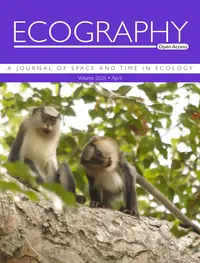
Joint spatial modeling of cluster size and density for a heavily hunted primate persisting in a heterogeneous landscape
Ecography, 2024
View Publication →
I am working on various research projects to develop and apply quantitative techniques to improve the monitoring of threatened species. These projects primarily focus on the application of Bayesian spatial modelling, data fusion and deep learning to data collected with non-invasive sensors such as camera traps, bioacoustics and earth observation. Further information on these projects, as well as published research, collaborators, and funding can be found below.
2025 - ongoing
2025 - ongoing
2024 - ongoing
2024 - ongoing
2024 - ongoing
2022 - 2024
Worked examples and code vignettes accompanying this research. View all →
Environmental Sustainability Institute
University of Exeter
Penryn Campus
Treliever Road
Penryn, Cornwall
TR10 9FE